Our own photograph · Photo 14
Neglect and fire damage
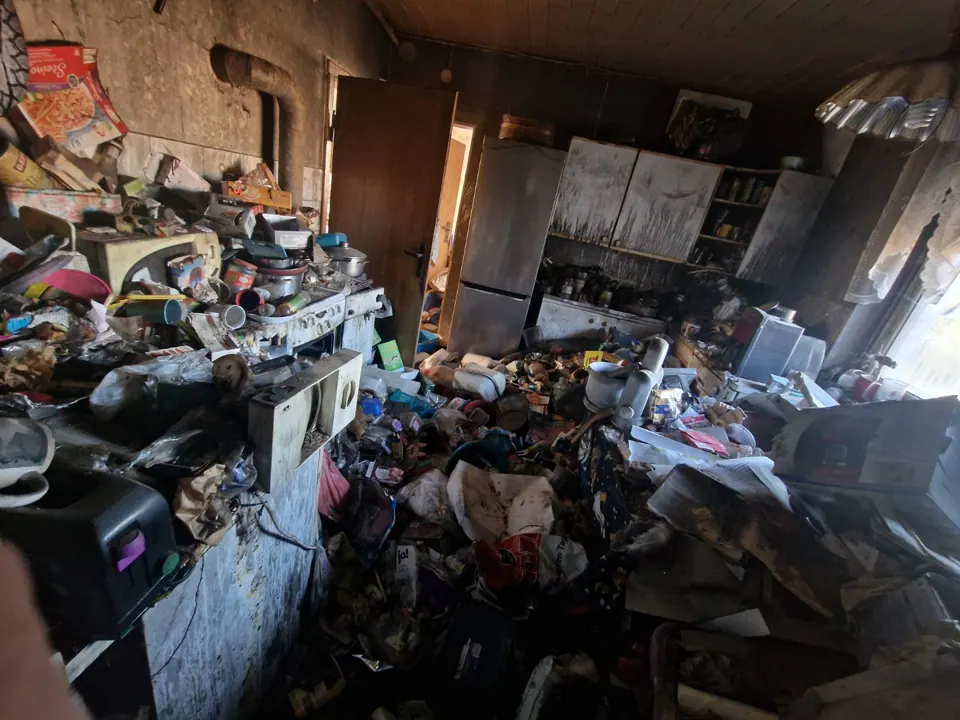
A severely neglected and cluttered property had also been damaged by fire. Clearance and restoration would have required substantial work. We took over the property and arranged its disposal.

Common property problems
There are many reasons to want to sell an apartment building. What matters is the actual situation, rather than a polished sales brochure.
Select a situation to add it directly to your enquiry.
The legal information relates to Germany; local law is assessed separately for properties abroad. The following examples come from our own photographs and the documented property histories. They show different circumstances; a comparable takeover or solution is not promised for other properties.
01 / PROPERTY PROBLEMS
When existing tenancies demand more time, money and energy than the property gives back.
Poor management can make apartment buildings, residential complexes and housing blocks financially unsustainable: vacancies, unpaid rent and ongoing operating costs put pressure on cash flow every month. Conflicts, unauthorised occupation or heavily cluttered flats can add substantial clearance and restoration costs.
Deferred repairs, old heating systems and high distribution losses can sharply increase energy costs. Large buildings may incur annual oil and gas bills well into five figures. Incorrectly installed insulation can contribute to damp and mould and put residents’ health at risk. The actual cause requires assessment by qualified specialists.
If income and expenditure remain out of balance, contact us early—ideally before a management crisis becomes an insolvency. We also assess buildings with difficult tenancies. An enquiry does not replace necessary safety measures, repairs or action subject to a deadline.
Our own photograph · Photo 14
A severely neglected and cluttered property had also been damaged by fire. Clearance and restoration would have required substantial work. We took over the property and arranged its disposal.
02 / PROPERTY PROBLEMS
Major investment needs meet a lack of funds or capacity.
A leaking roof, corroded steel beams, unsafe balconies or fire damage can make retaining a building financially and practically impossible. You can offer us the property in its current condition even if demolition exceeds your budget. Known damage and hazards should be disclosed openly in your enquiry.
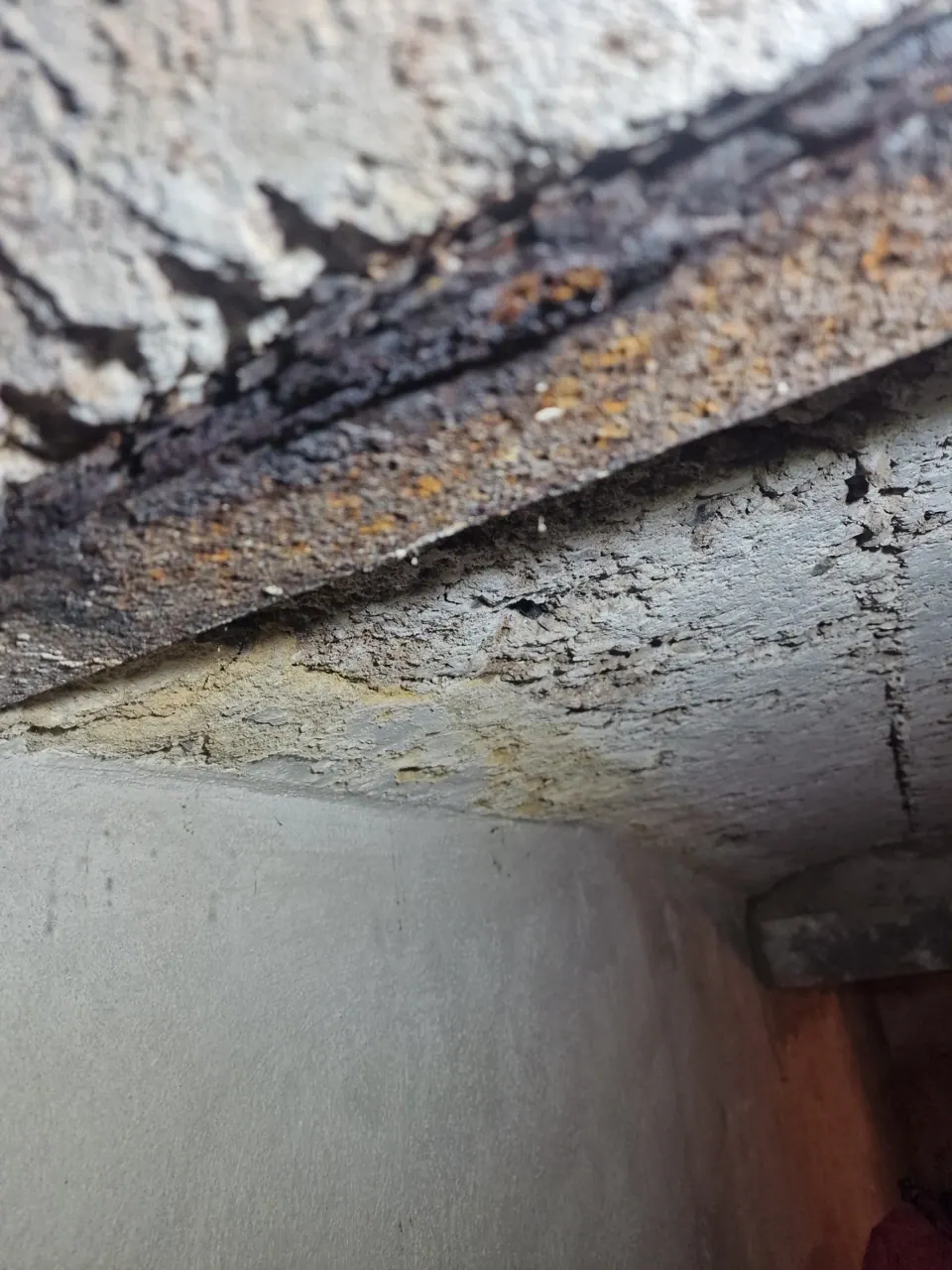
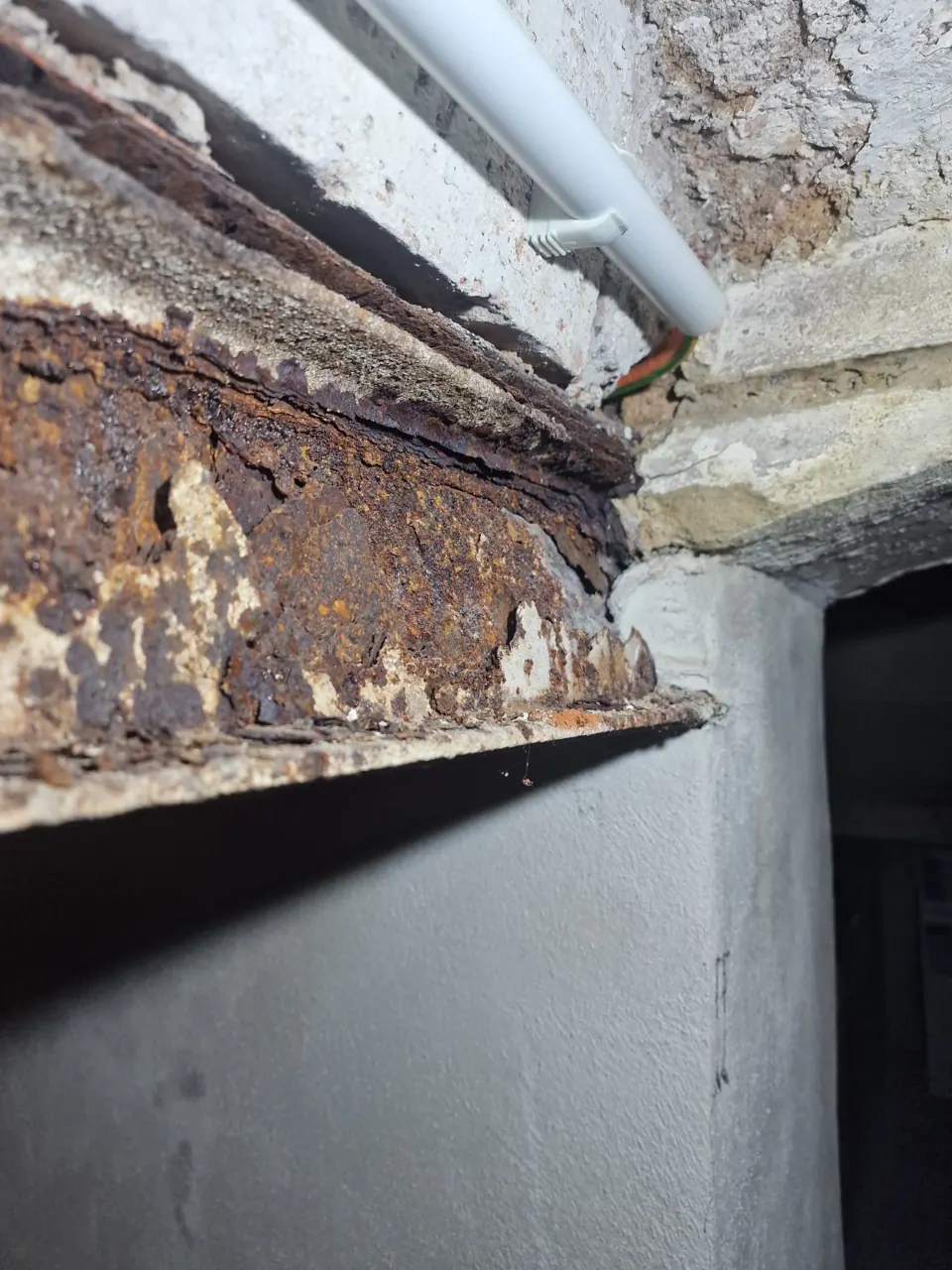
Our own photographs · Photos 04–08
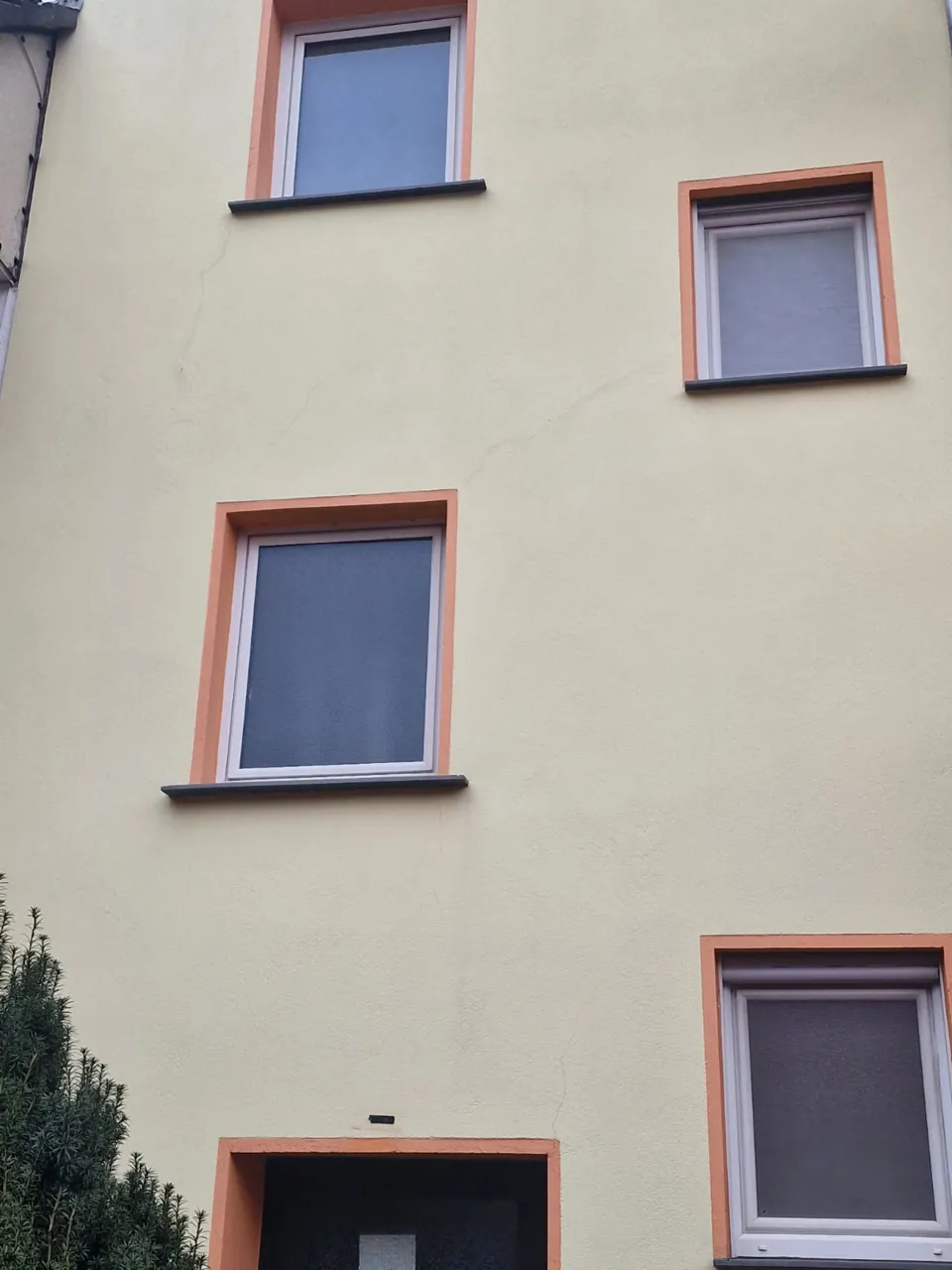
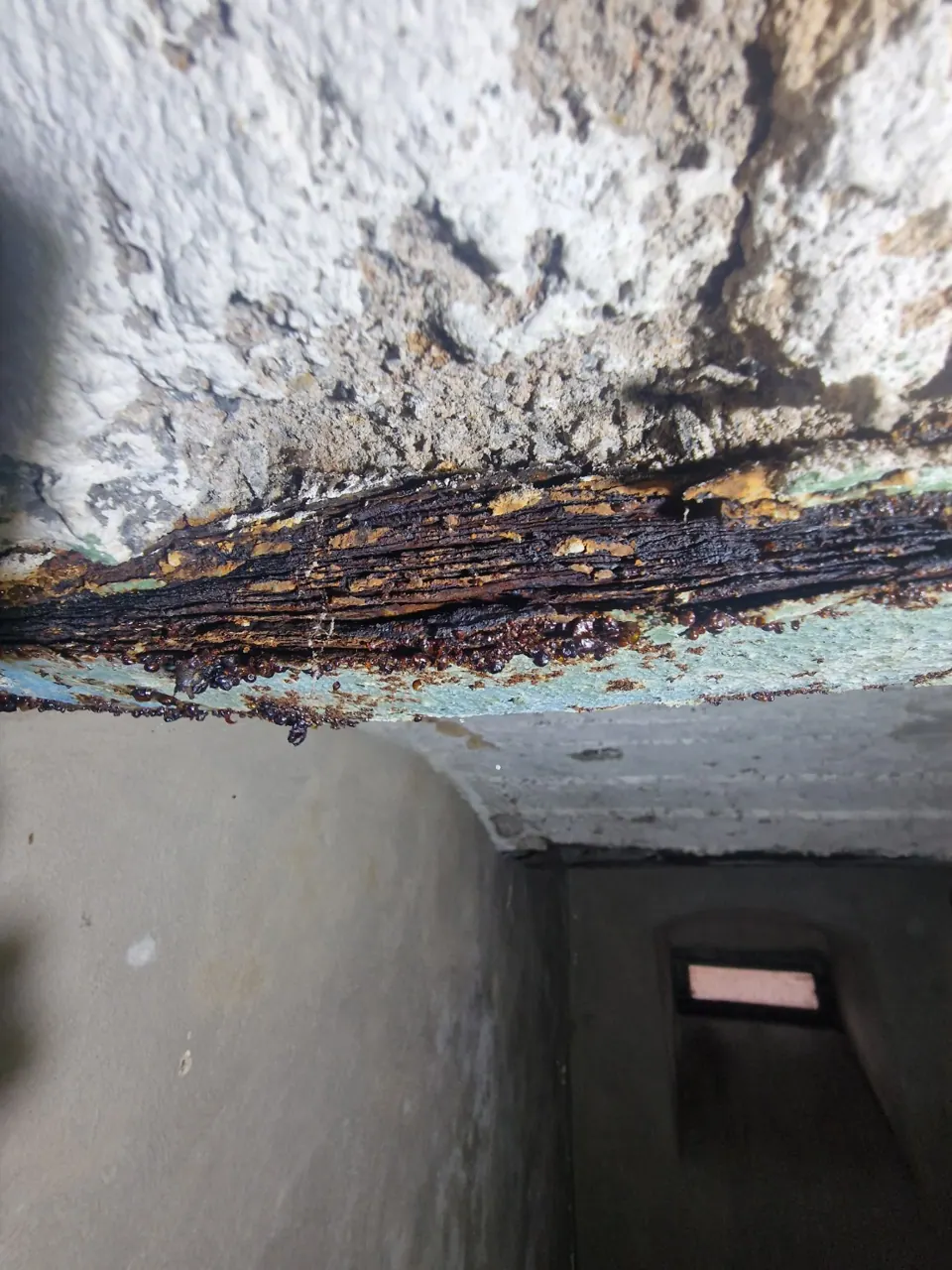
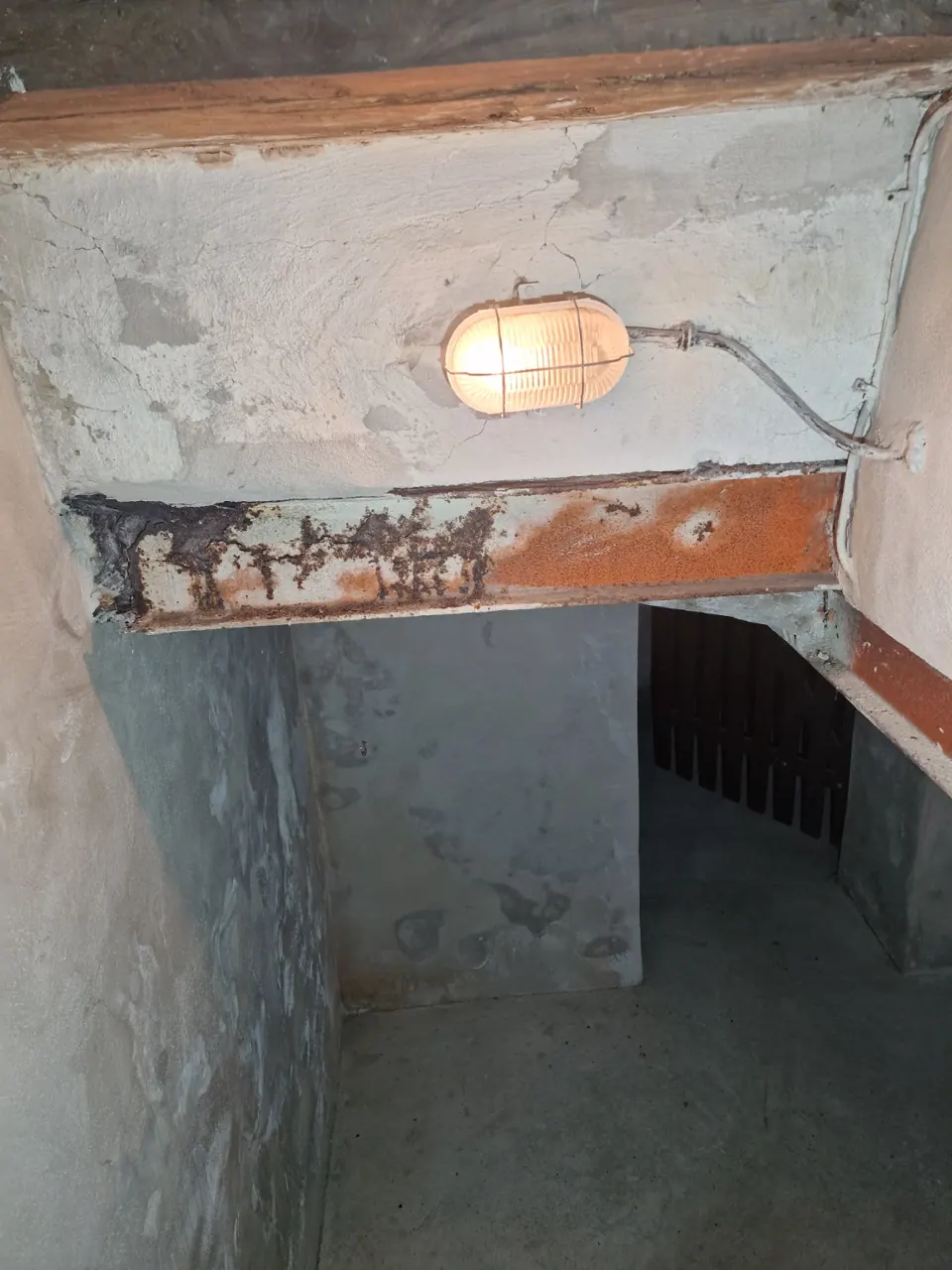
Settlement cracks in the façade led to a serious finding in the basement: the steel beams supporting the jack-arch ceiling and the loads of the upper storeys were severely corroded. Following the structural assessment, the building had to be evacuated because of an immediate risk of collapse, and its use was prohibited. Alternative accommodation was needed for the tenants.
Suitable renovation contractors were initially unavailable. Demolition could have cost several hundred thousand euros, exceeding the owner’s means. We bought the building for a symbolic price. Specialist tradespeople, structural engineers and architects made it possible to carry out extensive repairs. These repairs also cost us a six-figure sum.
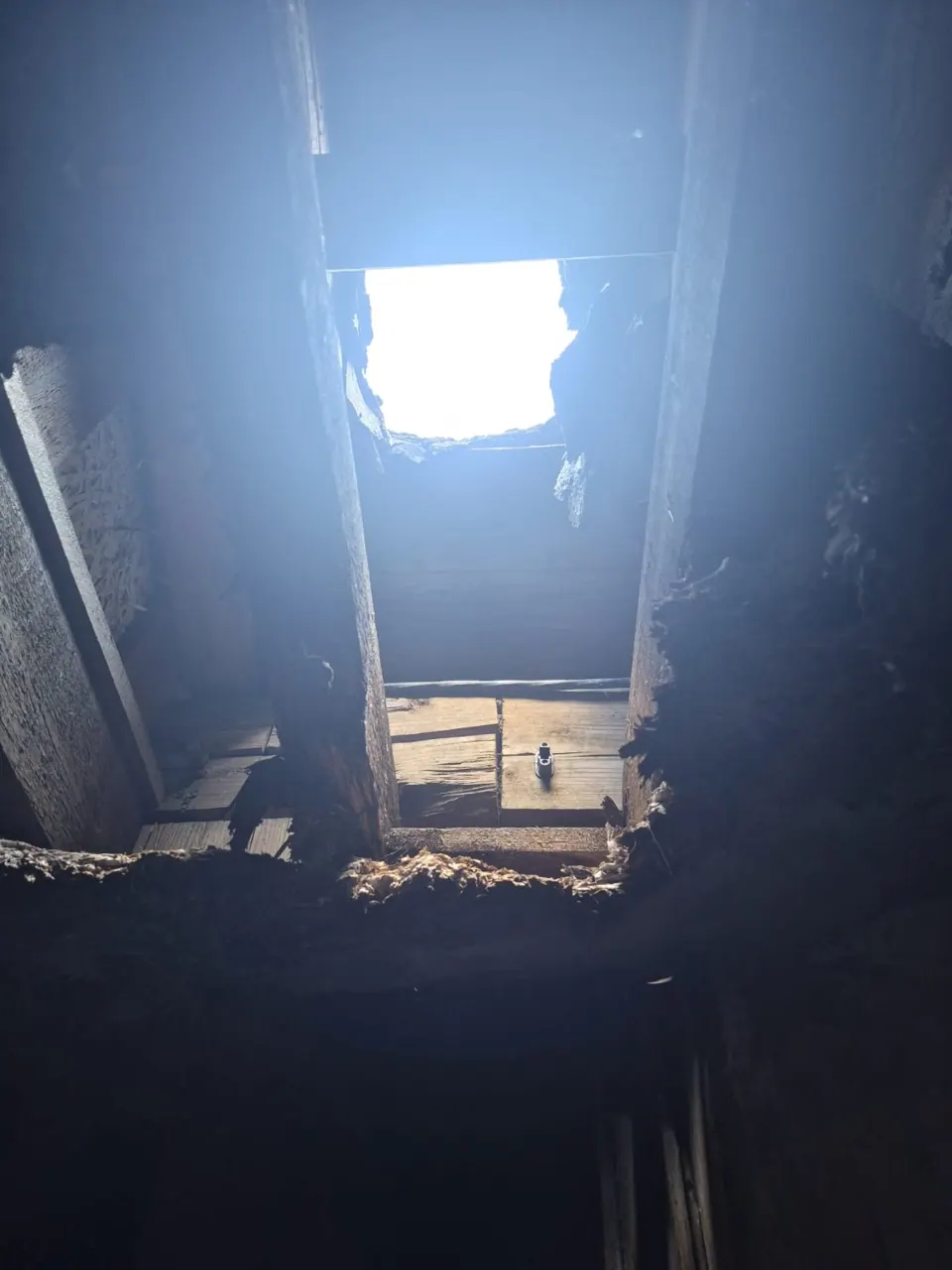
Our own photograph · Photo 01
Water entered through a hole in the roof over a long period. The storeys below collapsed. Renovation was not financially viable, while demolition was too expensive for the owner.
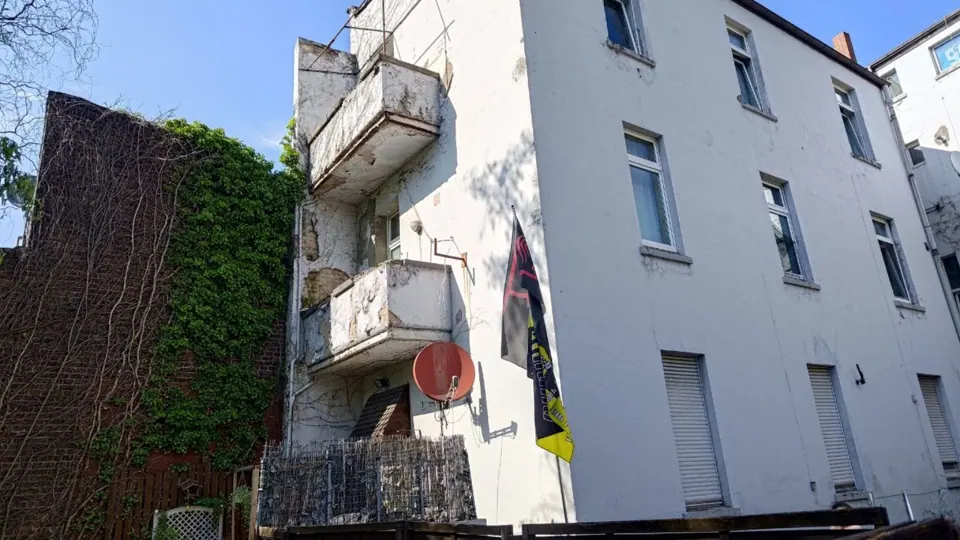
Our own photograph · Photo 11
The balconies of this apartment building in a major city in North Rhine-Westphalia were no longer structurally safe. A prohibition of use followed. Repair quotations exceeded the building’s value. We took over the property in return for a payment to the owner.
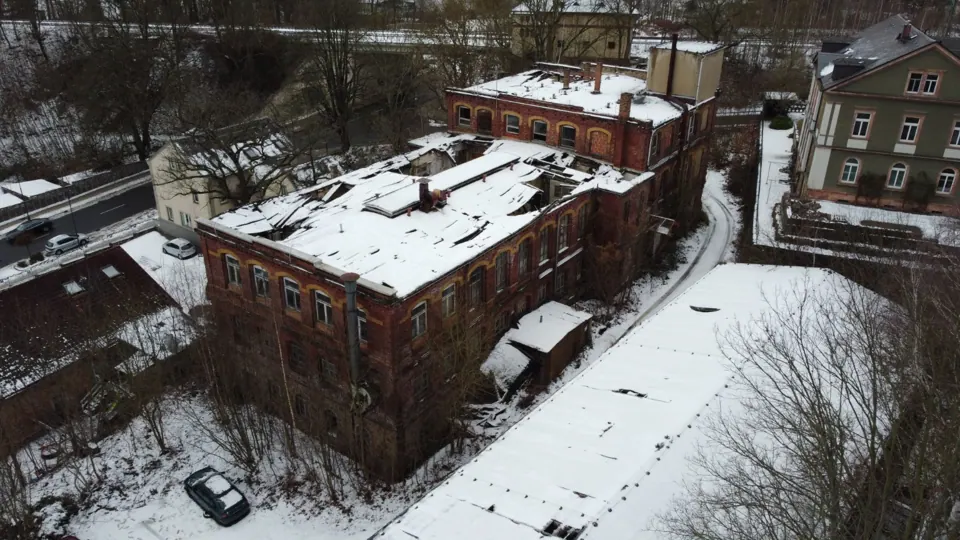
Our own photograph · Photo 16
A listed industrial building at risk of collapse raised more than safety issues. Unresolved contamination and possible soil pollution added to the burden. The owners no longer wanted to bear this responsibility. Suspected contamination must be distinguished from confirmed findings.
03 / PROPERTY PROBLEMS
Official notices, safety measures and approaching deadlines can restrict continued use.
Prohibitions of use, duties to keep premises safe, demolition orders and listed-building requirements can create time pressure and substantial costs. We assess these circumstances alongside the development potential. A change of ownership does not automatically remove existing requirements or personal liability; responsibilities and measures must be established specifically.
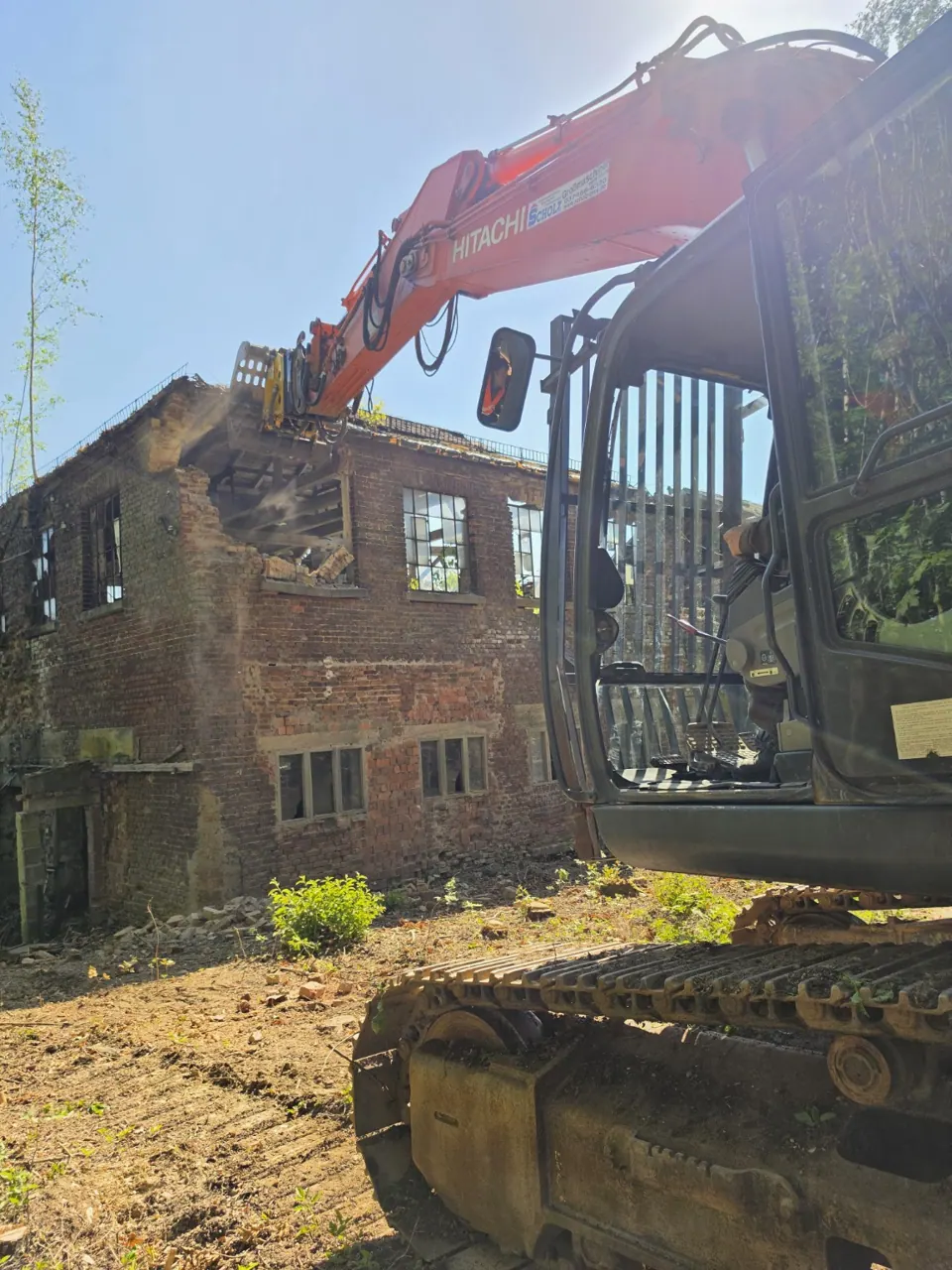
Our own photograph · Photo 02
This building near the railway tracks was no longer structurally safe. Official demolition notices and enforcement proceedings increased the pressure. The costly demolition work was beyond the owner’s means. The site also included a rental building of little value.
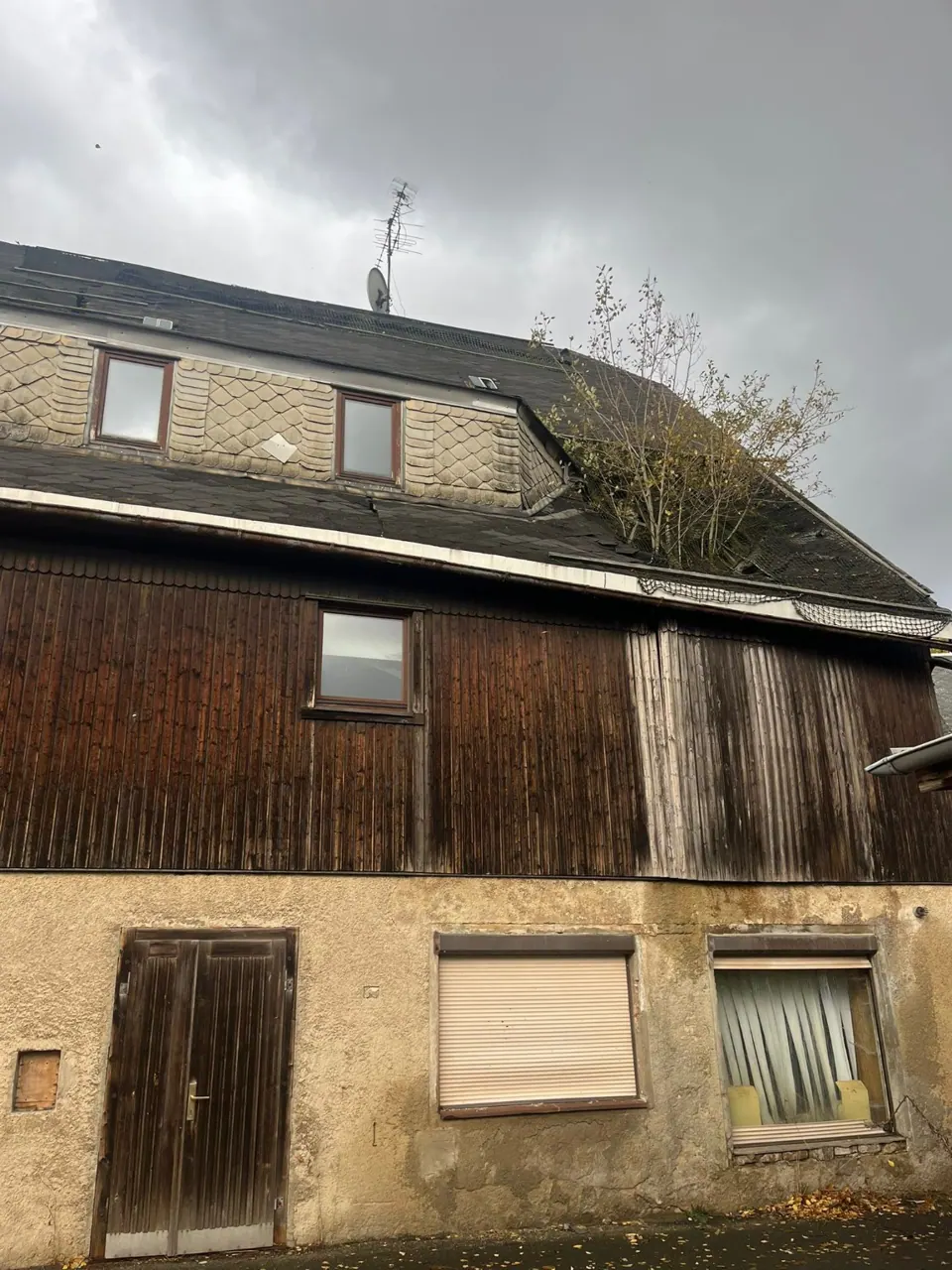
Our own photograph · Photo 03
A listed building was close to collapse. Negotiations with heritage authorities, requirements to keep the premises safe and the resulting costs overwhelmed the owner. She decided to part with the property.
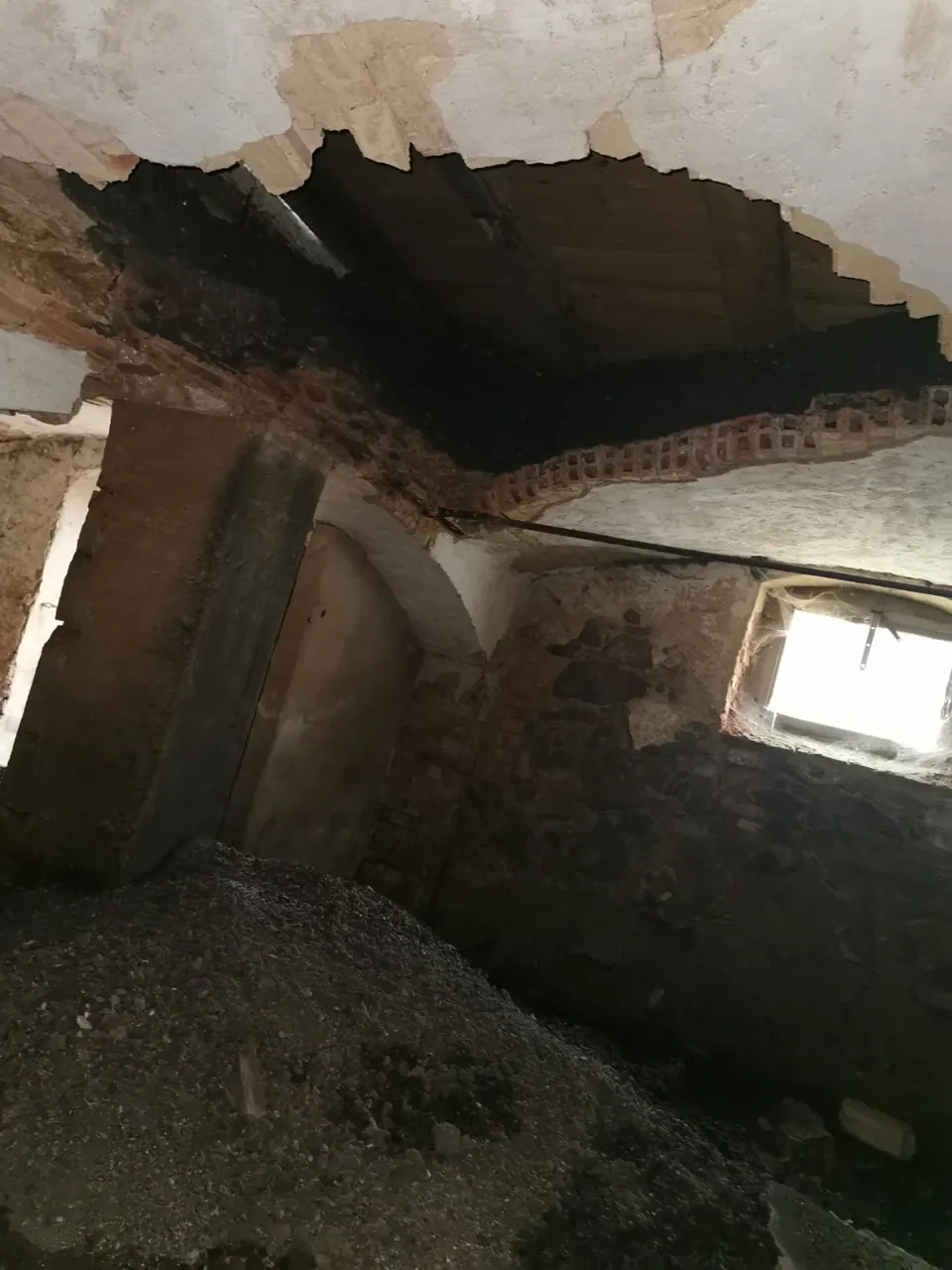
Our own photograph · Photo 10
The former servants’ house once belonged to a manor estate. The required renovation of the listed structure was, for the owner, out of proportion to the building’s value. He decided on a prompt sale.
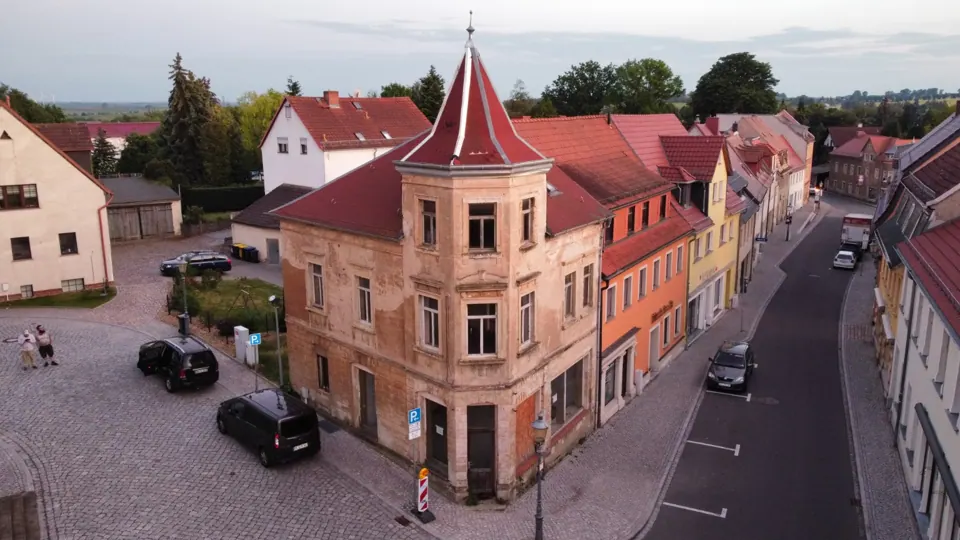
Our own photograph · Photo 12
This mixed residential and commercial building combined significant pressure from the heritage authority and pest infestation with limited prospects for financially viable renovation. That combination determined the decision to dispose of it.
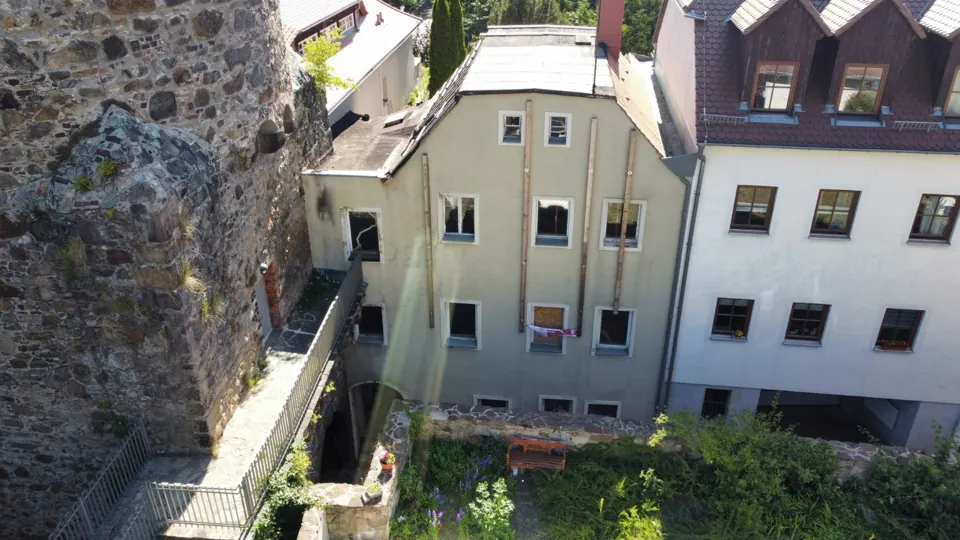
Our own photograph · Photo 13
The risk of collapse of a historic town wall presented the owners with financial, planning and legal challenges. Making it safe and developing it further exceeded their means.
04 / PROPERTY PROBLEMS
An inheritance, a dispute or life abroad can turn ownership into a lasting burden.
No longer want to negotiate costs, responsibilities and tasks with your fellow heirs? You can offer us your share of the inheritance for assessment. That share is an interest in the entire estate—not a freely transferable share in one individual estate property. Its transfer must be notarised. When selling to a third party, possible rights of first refusal held by fellow heirs must be considered. Selling an inheritance share does not automatically release the seller from estate debts.
An unexpected property inheritance may bring loans and other estate liabilities, renovation needs and ongoing costs. A land register entry alone does not show the actual amount of outstanding debt. Different interests within a community of heirs can prevent the sale of a jointly inherited property. Management decisions follow different rules depending on the circumstances; unanimity is not required for every decision.
In Germany, the usual deadline for disclaiming an inheritance is six weeks from becoming aware of the inheritance and the basis of entitlement; in certain cross-border circumstances it is six months. After the deadline, the inheritance is generally treated as accepted. Challenging acceptance or limiting liability to the estate may still be possible in individual cases. If there are debts or approaching deadlines, seek qualified advice immediately rather than waiting for a purchase assessment.
Is your property in Germany while your everyday life is now in another country? For owners who have emigrated and their heirs, management, finding contractors, tenant matters and German administration can quickly become burdensome. Selling is particularly difficult when a property attracts little demand on the conventional market. These are precisely the properties we would like to assess—even if you cannot be there in person.
A home in Germany kept available for your own use can establish a residence for tax purposes under Section 8 of the German Fiscal Code (AO), even after moving abroad. What matters is actual availability and circumstances indicating that the home is retained and used. Ownership alone or a purely theoretical ability to live there does not automatically suffice.
A German residence can give rise to unlimited income tax liability and, in principle, taxation of worldwide income. Double taxation agreements and other rules determine the actual tax treatment. Other German income may remain taxable even after a sale. Whether selling or renting out the property long term suits your circumstances should be reviewed with a tax adviser beforehand.
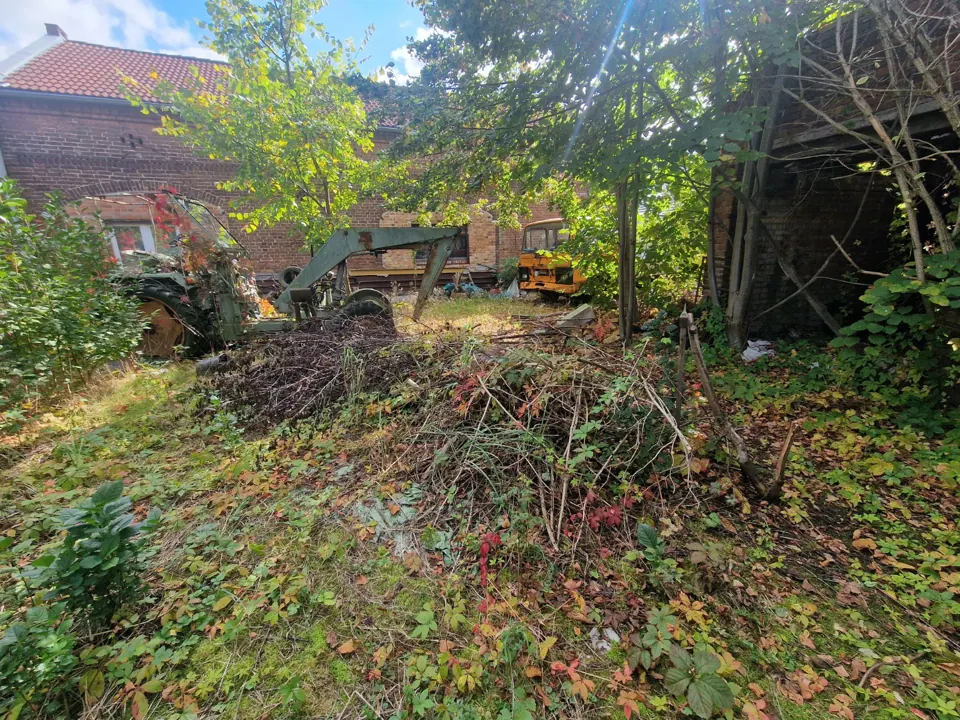
Our own photograph · Photo 15
A neglected plot of little economic value burdened the represented owner. His representative sought a way to part with the land promptly. We were able to complete the transfer together.
Whether a sale affects social benefits and which approvals a representative needs depend on the individual circumstances. This example does not provide any assurance about entitlement to benefits.
05 / PROPERTY PROBLEMS
Ongoing costs and necessary investment put financing under pressure.
If financing obligations, ongoing costs and necessary investment consume the economic benefit, selling in the current condition may make sense. We also assess encumbered properties. A registered land charge does not automatically mean an outstanding debt of the same amount. Loan balances, security rights and redemption conditions require separate assessment; a low purchase price does not itself resolve remaining debts.
Vacant, heavily encumbered or structurally unsafe properties can impose a substantial burden on an insolvency estate month after month. While disposal stalls, operating costs, condominium charges, safety costs and necessary measures continue. Without realistic disposal prospects, further waiting can consume the funds available to creditors. We also assess difficult insolvency properties for a direct purchase—particularly residential rental buildings that cost more than they earn.
Agreements on estate costs, orderly transitional management, the organisation of safety measures and management crisis measures can be negotiated specifically. Consents, redemption amounts, cost contributions and the date of transfer of responsibility are agreed with the parties involved. An enquiry does not replace necessary safety measures.
Depending on their basis and the procedural circumstances, operating and safety costs may be liabilities of the insolvency estate (Sections 53 and 55 of the German Insolvency Code, InsO). Personal liability under Section 60 InsO requires a culpable breach of duties specific to insolvency. Current outstanding loan balances, priorities and disposal costs determine any possible proceeds for the estate; the nominal amount of a registered land charge alone is insufficient.
Release from the insolvency estate may be an option in an individual case. It does not, however, automatically end obligations already incurred. A direct purchase can open up another route to disposal before ongoing costs and risks further reduce the estate. Actual outstanding secured claims, available documents and a practical handover are decisive.
For land and property sales, the estate has no general statutory entitlement to 9% of the proceeds. Any cost contributions or payments to the estate must be agreed individually with the secured creditors. Section 35(2) InsO concerns the debtor’s self-employment and is not a general rule for releasing land and property from the estate.
06 / PROPERTY PROBLEMS
The original financial model no longer works.
Even a large building may have little viable economic use: a lack of demand, an unfavourable location or an outdated use concept combines with continuing heating, upkeep and maintenance costs. A low sale price can then be the more sensible option compared with ongoing losses. The actual figures need to be weighed up.
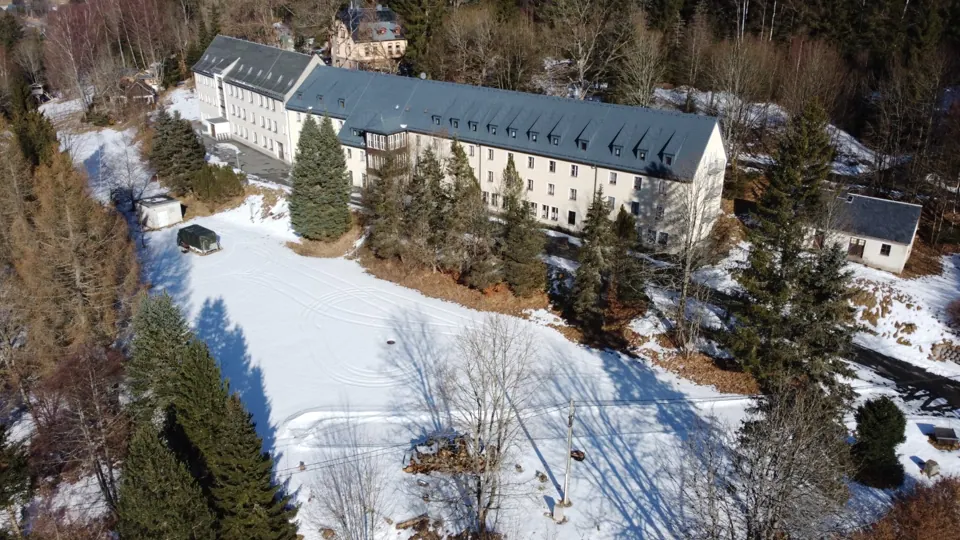
Our own photograph · Photo 09
This large former vocational school is in an isolated location in an economically weak region. No viable use could be found for a building of this size in this location. According to the information supplied for this case, the old oil heating system, maintenance and upkeep cost mid-five-figure sums each month.
High ongoing losses can make a sale sensible even if a high purchase price is unlikely. This individual case does not indicate typical costs for other buildings.
07 / PROPERTY PROBLEMS
Open questions about ownership, use or documents make selling more demanding.
You own a property, but have little practical economic use of it? Rights of residence, rights of use and usufruct can substantially restrict your own use, letting or development. Depending on the agreement and applicable law, the owner may still bear taxes, insurance or upkeep costs. With usufruct, however, the beneficiary generally also bears certain expenses and ordinary maintenance costs; the allocation of costs cannot be generalised.
A sale does not automatically extinguish these rights. The land register, the deed establishing the rights, their priority and the specific allocation of costs are needed for assessment. We also consider these properties; the purchase price and possible use depend on the rights that remain in place.
08 / PROPERTY PROBLEMS
A planned development cannot be continued with your own resources.
When specialist contractors are unavailable, permits are unresolved or the budget has run out, a development already started often cannot continue. We calculate the cost of further development and only purchase a property if we can identify a financially viable way forward.
09 / PROPERTY PROBLEMS
A change of ownership can be the right next step even without an acute crisis.
Not every sale needs an acute crisis. You can deliberately choose to leave behind management work, uncertainty or a property that no longer fits. Achieving the highest possible market price and making a straightforward exit may be different priorities. Our purchase model is particularly suited to owners who place greater weight on relief and selling in the current condition.
Germany and selected European countries
Our core business is currently in Germany. You can also offer us properties with problems in Austria, Switzerland, Czechia, Poland, Denmark, the Netherlands, Belgium, Luxembourg and Liechtenstein .
We also assess difficult circumstances abroad. The possible transaction depends on the property, local rules and suitable partners. Select the property’s country in the form.
Offer a property in Germany or abroad ↗The first step is an honest overview
No polished sales brochure needed. Enter the location, occupancy status, known problems and your expectations in a few steps.